Gas Market Overview Q3 2026
The Northern Hemisphere heating season is approaching: Europe enters winter with a tight market and elevated risks
- Gas markets moved into a tighter operating environment
- European gas storage: the filling deficit deepened toward autumn
- Competition for LNG cargoes intensified as Middle East supply restrictions continued
Gas markets moved into a tighter operating environment
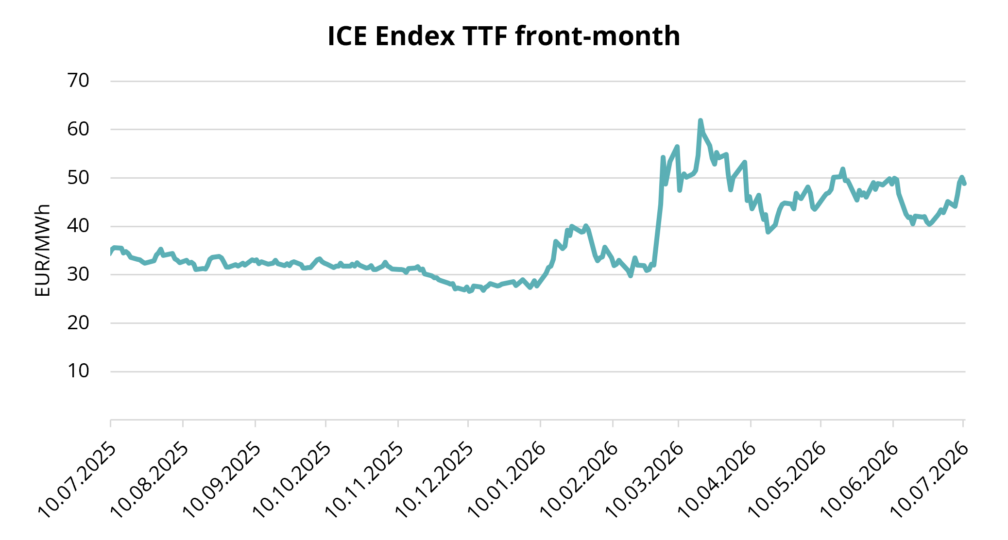
The third quarter of 2026 brought a clear turn in the dynamics of the European gas market. After the relatively stable situation in the second quarter, prices turned sharply upward in Q3. During July, TTF prices reached as high as approximately €84.50/MWh, and the average price for the whole quarter was €63.69/MWh. At the end of September, the price settled at around €70 per megawatt hour.
Behind the price increase were prolonged LNG supply disruptions in the Middle East, growing concern about the adequacy of gas storage, and intensified competition with Asia for flexible LNG cargoes. The most significant difference compared to the second quarter was the continuation of the physical supply shortage. After the ceasefire between the United States and Iran collapsed, the Strait of Hormuz closed, significantly reducing the availability of liquefied natural gas from Qatar and other producers in the region.
A physical gas shortage in Europe was avoided thanks to Atlantic LNG imports and pipeline deliveries, but sourcing replacement cargoes raised market prices considerably. Expensive gas doubled the price of electricity in continental Europe compared with the previous year, which was also reflected in Finland and the other Nordic countries. Although Finland’s regional gas system operates reliably and there is sufficient import capacity from the sea, Finnish seasonal gas users face price risk toward the end of the year due to tightness in the global market.
European gas storage: the filling deficit deepened toward autumn
The storage filling season progressed with difficulty in the third quarter. Although storage levels rose from about 50 percent at the beginning of July to 71 percent of capacity by the end of September, the filling pace was not enough to close the deficit that had accumulated earlier in the year.
The filling pace was held back by both physical and economic constraints. Limited LNG supply from the Middle East restricted the volumes available. At the end of September, the European Commission warned that low storage levels could cause significant price pressure in winter. However, Europe’s abundant LNG regasification capacity and sea-based import connections mean that a storage level of around 70 percent is expected to be sufficient for the winter.
Gas market outlook for the fourth quarter
The final quarter of 2026 begins in a clearly tighter market situation compared with the start of the year. As the filling season ends, the market’s focus shifts from building up storage to the withdrawal pace during the winter season. On the threshold of the heating season, weather conditions and Europe’s overall storage level largely determine the price level at which Finland’s market enters winter.
The greatest source of uncertainty toward the end of the year is the winter weather. A normal or mild winter would keep the markets in balance with current storage levels and Atlantic LNG imports. A colder-than-normal winter, however, would rapidly accelerate storage withdrawals in a situation where buffers are already thin. In the electricity market, price spikes are evened out by the return of Finland’s nuclear power plants to full output after autumn annual outages, as well as by Nordic wind power. Low Nordic hydro reservoirs and the high price of gas, on the other hand, increase the risk of price volatility in the energy landscape.
At the same time, the Strait of Hormuz difficulties are not expected to be resolved quickly, so the recovery of Middle Eastern LNG flows will continue to be delayed. Europe will continue competing with Asia for flexible Atlantic cargoes. If Asian demand grows with cold weather at the same time as European demand, global LNG markets could tighten even further.
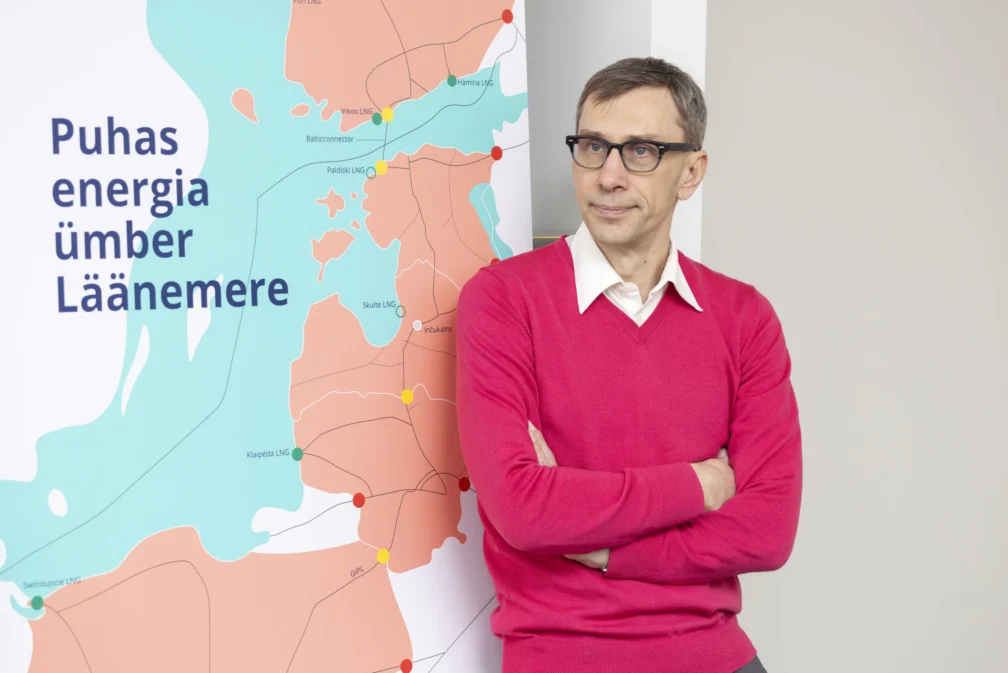
“Although the global market situation and events in the Middle East inevitably impact general gas price levels in Finland, Finnish customers need not worry about the physical availability of gas. Elenger’s strong position in the Baltic Sea region, our own long-term import channels, and the Inkoo terminal ensure that we can guarantee flexible and reliable gas supplies to our customers, even amidst market turbulence,” summarizes Pasi Näkki, CEO of Elenger Finland.